


MoMA Formalizes Digital Art History
Hello Beauties,
MoMA’s acquisition of eight CryptoPunks alongside a complete Chromie Squiggle set marks a quiet but definitive shift in how digital art is institutionally framed. This is neither an experiment nor a symbolic nod toward innovation. It is canon formation.
“The moment we’ve been building toward has arrived.”
— MoMA via X
Why this moment matters
By integrating on-chain works into its permanent collection, The Museum of Modern Art positions blockchain-based art within the continuum of contemporary practice rather than isolating it as a technological aside. Digital provenance, generative systems and networked authorship are now formally acknowledged as established artistic languages.
CryptoPunks as cultural origin
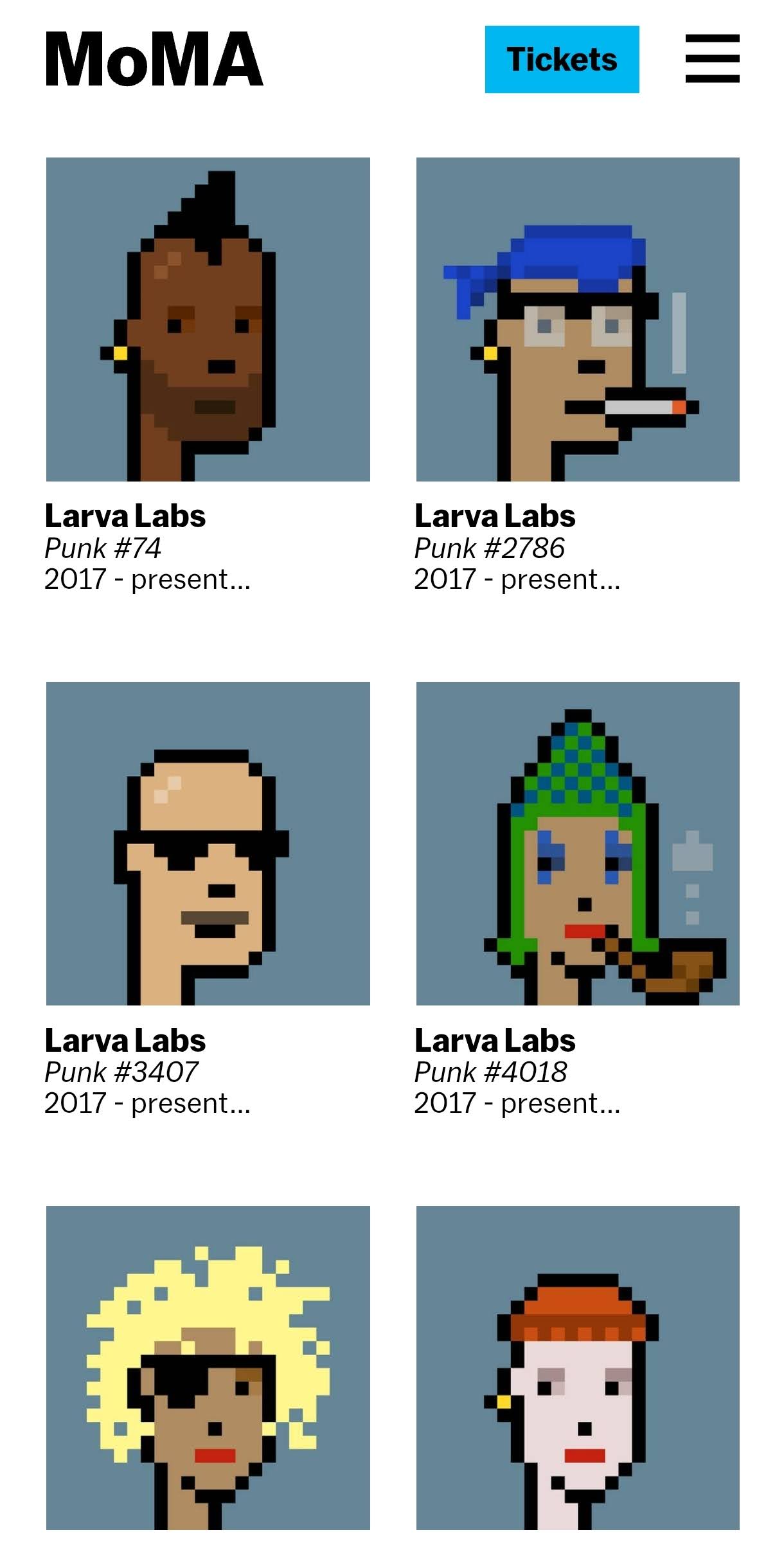
Created in 2017 by Larva Labs, CryptoPunks represent a cultural origin point of on-chain identity. Their apparent visual simplicity belies their significance: they introduced verifiable ownership, digital scarcity and identity into a native blockchain context. Over time, they evolved into social artifacts marking early participation in decentralized culture.
Chromie Squiggles and generative language
Chromie Squiggles, conceived by Erick Calderon (Snowfro) and released via Art Blocks, articulate a parallel trajectory grounded in generative logic. Each work is created at the moment of minting through code-driven parameters and chance. Their relevance lies in process rather than surface aesthetics, translating systems, repetition and variation into visual form.
From private patronage to public stewardship
The structure of the acquisition is equally telling. Rather than a traditional market transaction, the works entered MoMA’s collection through donation, echoing historical models of museum formation shaped by private patronage. This signals a transition from private accumulation to public responsibility.
Preservation becomes the narrative
The question is no longer whether digital art belongs in museums, but how it will be preserved. Conservation must now account for code, software environments, wallets and blockchain dependencies, expanding traditional definitions of artistic materiality.
MoMA’s decision establishes a reference point. Digital art has moved from the periphery to the archive, from speculation to history. The canon has expanded — quietly, deliberately and with long-term consequence.
xo

Recommended Reads
- Hafftka on Tanja Bock Magazin
- The Lana Dubai: A Festive Season of Elegance, Craft and Couture
- Chanel Métiers d’Art 2026: Craftsmanship as Cultural Capital
