


FARFETCH Holiday 2026:
Two Visions, One New Language of Luxury
Through Marili Andre and Sharna Osborne, the season becomes a conversation between getting dressed and giving thoughtfully — and an intriguing expression of FARFETCH’s editorial identity.
Holiday campaigns rarely arrive quietly. They come wrapped in sequins, sentiment and the familiar promise that one perfectly chosen gift can capture the entire season.
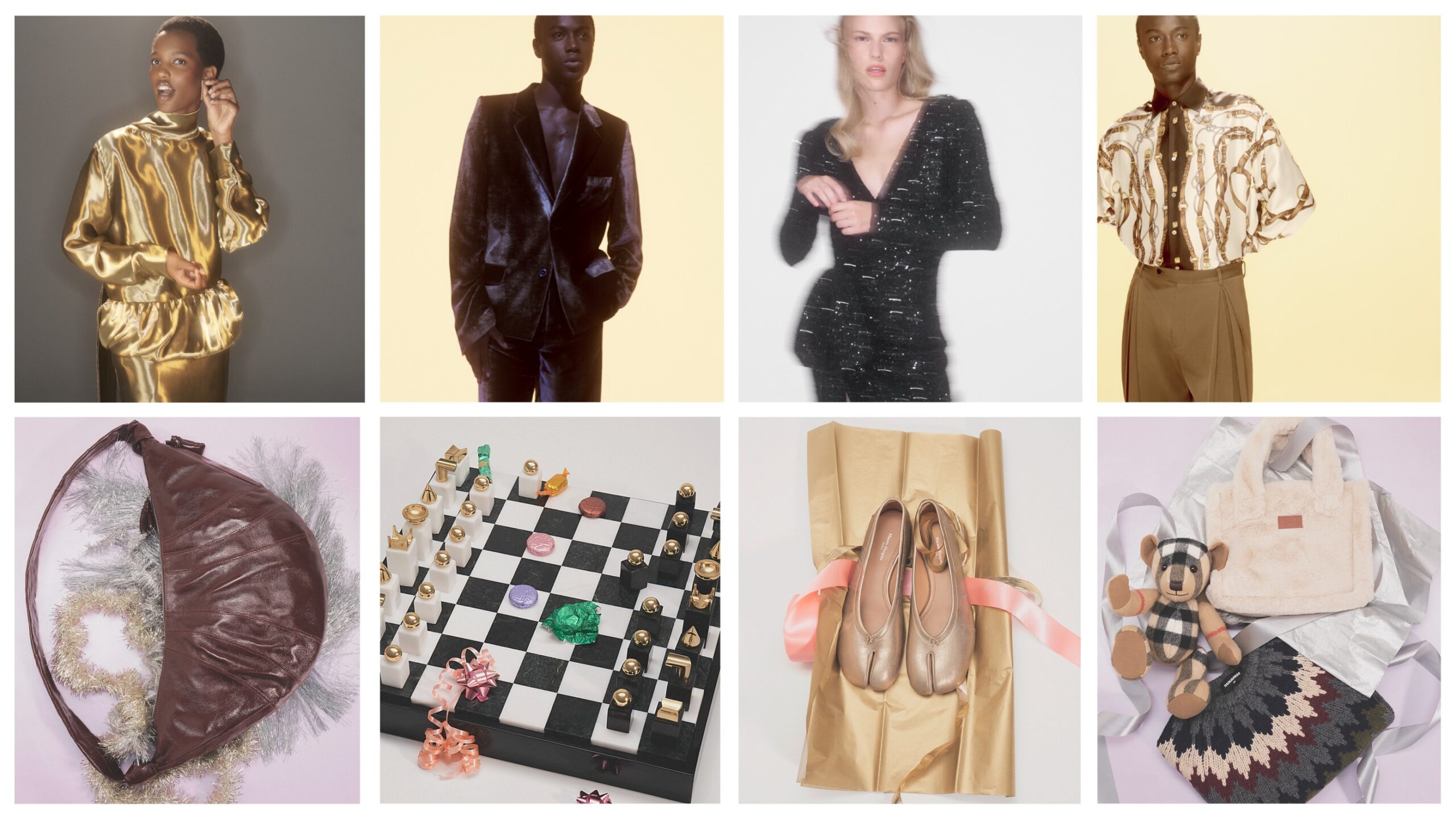
What makes the FARFETCH Holiday Campaign 2026 interesting is its refusal to rely on a single festive mood. The global luxury platform has invited photographers Marili Andre and Sharna Osborne to explore two complementary ideas: the pleasure of dressing up and the more personal art of giving.
There is polish, of course. There is shine. But there is also a studied playfulness in the presentation of objects, a sense of spontaneity in the portraiture, and a surprisingly coherent creative argument beneath the seasonal abundance.
For us, that is where the campaign becomes more than an exercise in festive merchandising.
What You Need To Know
- FARFETCH unveiled its 2026 Holiday Campaign on 15 October 2026.
- Photographers Marili Andre and Sharna Osborne bring distinct creative sensibilities to partywear and gifting.
- The campaign spans women’s and men’s edits, fine jewellery, watches, pre-owned pieces, small luxuries and holiday dressing.
- The wider fashion proposition includes designers such as Dolce&Gabbana, Ferragamo, Balmain, 16Arlington and Valentino Garavani.
- FARFETCH also introduces an elevated holiday unboxing experience for orders delivered through FARFETCH FIRST, its premium next-day service across Europe.
Two Photographers. Two Moods. One Season.
The strongest decision in this campaign is structural. FARFETCH does not try to compress every interpretation of the holidays into one immaculate world. Instead, it lets two sensibilities sit beside one another.
Andre’s energetic approach to portraiture gives the campaign a sense of movement and human immediacy. The dressed-up self is the point: less staged spectacle, more presence.
Osborne’s playful, tactile approach makes the gifting edit feel art-directed rather than catalogued. The objects develop character through composition, texture and wit.
Those viewpoints may appear different, but together they express something consistent: individuality is not a disruption to the holiday narrative. It is the narrative.
Partywear Without the Expected Noise
The campaign gives festive dressing its customary metallic finish, bold silhouettes and statement-making textures. Yet the imagery is notably more controlled than the usual holiday crescendo.
A sharply cut look or a glimmering evening dress is allowed to occupy its own visual space. There is less need for decorative excess because the styling and the people wearing it supply enough personality.
The broader partywear selection moves through Dolce&Gabbana, Ferragamo and Balmain, alongside more informal statements from 16Arlington and Valentino Garavani. That range is meaningful: contemporary celebration is no longer governed by one dress code.
What we find most compelling is the refusal to treat occasion dressing as costume. The visual language is about how someone chooses to show up, rather than how closely they follow a prescribed festive formula.
“Luxury is not made more convincing by showing everything. It becomes more compelling through the choices that give everything context.”
Why the Art of Gifting Needs an Editorial Eye
Luxury gifting can become an endless catalogue of supposedly essential objects. FARFETCH takes a more interesting route by giving the category a sense of texture, humour and emotional specificity.
Across the holiday edits, small luxuries sit alongside exceptional gifts, jewellery, watches and pre-owned archival finds, including pieces from houses such as Hermès and Chanel. Prada loafers and Maison Margiela’s Tabis appear as examples of items with recognisable design identities, rather than anonymous objects selected for their price tags.
That distinction matters. A marketplace with an enormous assortment does not automatically have a strong point of view. At its best, curation turns breadth into something that feels intentional.
The still-life language reinforces precisely that idea: the gift becomes interesting because of how it is seen, not merely because of what it costs.
Even the Box Has a Role to Play
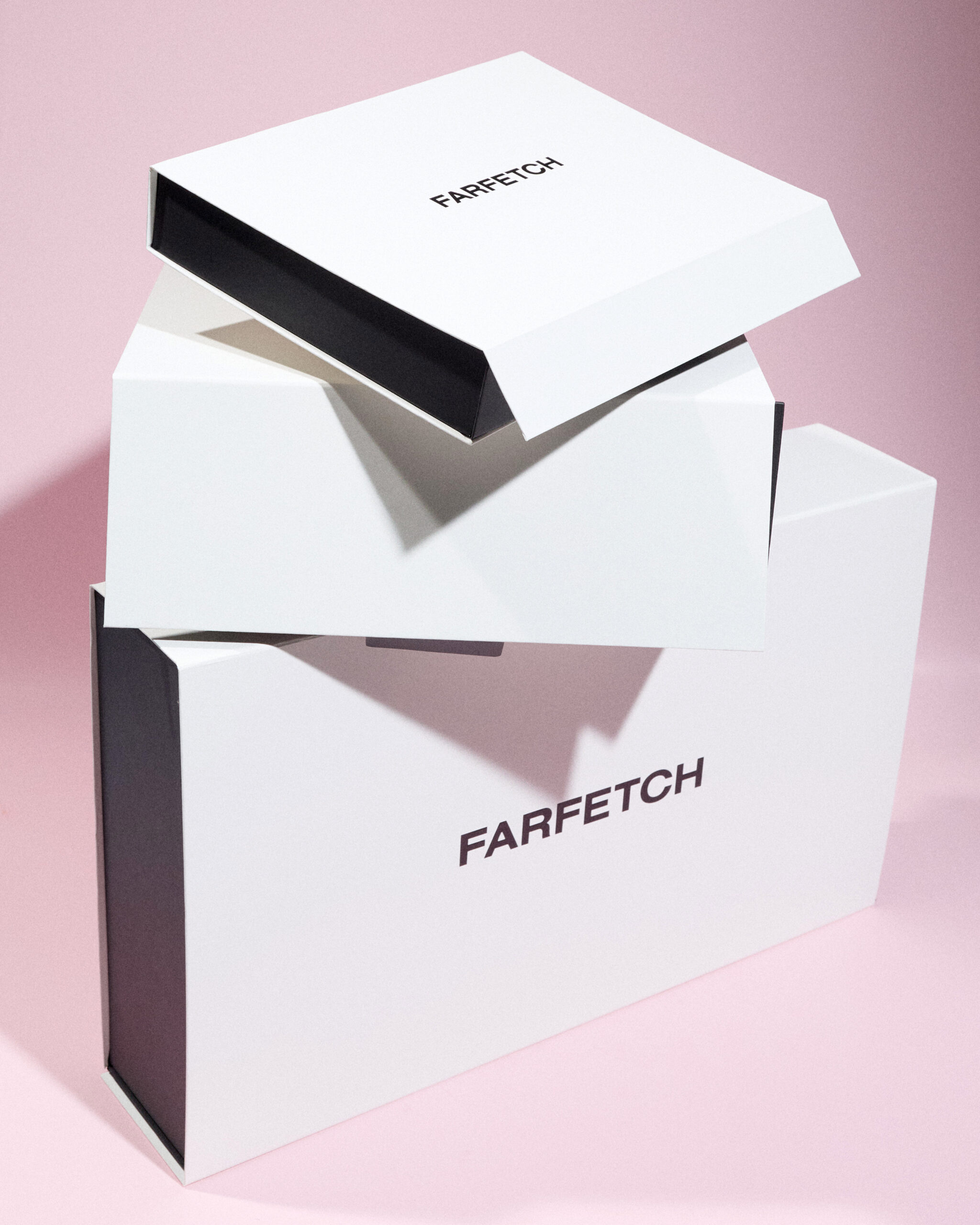
The newly redesigned FARFETCH box adds another dimension to the holiday story. For festive deliveries made through FARFETCH FIRST in Europe, the unboxing experience becomes part of the proposition.
It is a subtle but important reminder that luxury is experienced in more places than the product page or the campaign image. Arrival, presentation and anticipation can carry their own meaning.
A beautiful object may begin with desire. The way it arrives determines part of what we remember.
The Real Luxury Product Is Editorial Judgment
FARFETCH occupies a distinctive place in the luxury ecosystem. It brings together boutiques, designers and collectible fashion from across the globe, rather than presenting the singular universe of one maison.
That freedom is also a creative challenge. An extraordinary range of choice can easily become visual noise. A holiday campaign therefore needs to do more than make the inventory seasonal: it needs to suggest a way of navigating it.
The 2026 campaign responds through two well-defined creative approaches and a broader edit that moves between partywear, cold-weather escapes, warm-weather holidays and refined loungewear. The categories vary, but the underlying argument remains constant.
FARFETCH is most convincing when it behaves not simply like a place where luxury can be found, but like an editor that knows why certain things belong together.
THE TBM VIEW
For us, the most sophisticated aspect of the FARFETCH Holiday Campaign 2026 is not its festive sparkle or its roster of exceptional labels. It is the decision to let contrast do the work.
One photographer gives the season movement and character; the other offers tactile humour and intimacy. The result is neither a traditional gift guide nor a generic partywear campaign. It is a more nuanced expression of the platform’s ability to connect very different luxury worlds.
Perhaps the smartest decision is that FARFETCH does not insist every image speak the same visual language. Two perspectives can be more revealing than one — especially when a business is built on the richness of choice.
“The best holiday campaigns do not simply tell us what to want. They give those choices a world worth entering.”
FARFETCH Holiday Campaign 2026: FAQ
Who photographed the FARFETCH Holiday Campaign 2026?
The campaign features the work of fashion photographers Marili Andre and Sharna Osborne, whose complementary approaches shape its partywear and luxury-gifting narratives.
When was the 2026 holiday campaign announced?
FARFETCH presented the campaign on 15 October 2026, with its curated seasonal edits available globally.
Which categories are featured?
The selection includes women’s and men’s partywear, fine jewellery, watches, small luxuries, pre-owned finds, skiwear, warm-weather pieces and loungewear.
What is FARFETCH FIRST?
FARFETCH FIRST is a premium next-day delivery service across Europe. The brand’s festive announcement highlights redesigned packaging and an elevated unboxing experience for eligible deliveries.

Recommended Reads
FARFETCH Autumn/Winter 2026: New Creative Direction in Paris
The September campaign that sharpened the editorial language of FARFETCH through architecture, atmosphere and a sense of transition.
FARFETCH Pre-Fall 2026: 3 Transeasonal Trends
How colour, coastal settings and polished wardrobe choices reframed the familiar transition between seasons.
FARFETCH Spring/Summer Campaign 2026 in Mexico City
A closer look at fashion, location and the evolving language of versatile luxury dressing.
